Island-hopping on Seil, Easdale and Luing
The Slate Islands are a collection of islands which sit off Scotland’s West Coast, within easy reach of Oban. They are not nearly as well-known as their Inner Hebridean neighbours, which is exactly why they are so appealing. Read on, to discover my findings from the intriguing islands of Seil, Easdale and Luing.

This trip to The Slate Islands was on a paid campaign to promote Scotland’s West Coast Waters
The Slate Islands are super-interesting and truly unique, with quirky good looks and infinite charm. They’re also a doddle to get to, so they must be really busy, eh? NOPE.
Scottish people who I spoke to about my trip fell decidedly into one of two camps: they were very familiar with the islands – having already visited or seen them on a documentary – or they hadn’t even heard of them.
I’ll hold my hands up and admit that I belonged to the latter, until my island-hopping exploits reached an all-time high when I turned 30.
As well as my new-found appreciation for good-quality Tupperware and nights in, this turning point in my life saw me intently studying maps and researching new island territory to roam. It wasn’t long before The Slate Islands fell onto my radar.
The Slate Islands of Seil, Luing, Easdale and Belnahau are famed as the ‘islands that roofed the world’. It was only when I arrived to explore them for myself, that I discovered the true extent of the slate industry’s influence on the land and its people.
Slate mining was the primary source of employment to the island people throughout the 19th and 20th century, and the product of their hard, dangerous labour was exported across the world, as far as Canada, the Caribbean and New Zealand; at a rate of 9 million roofing slates per year.
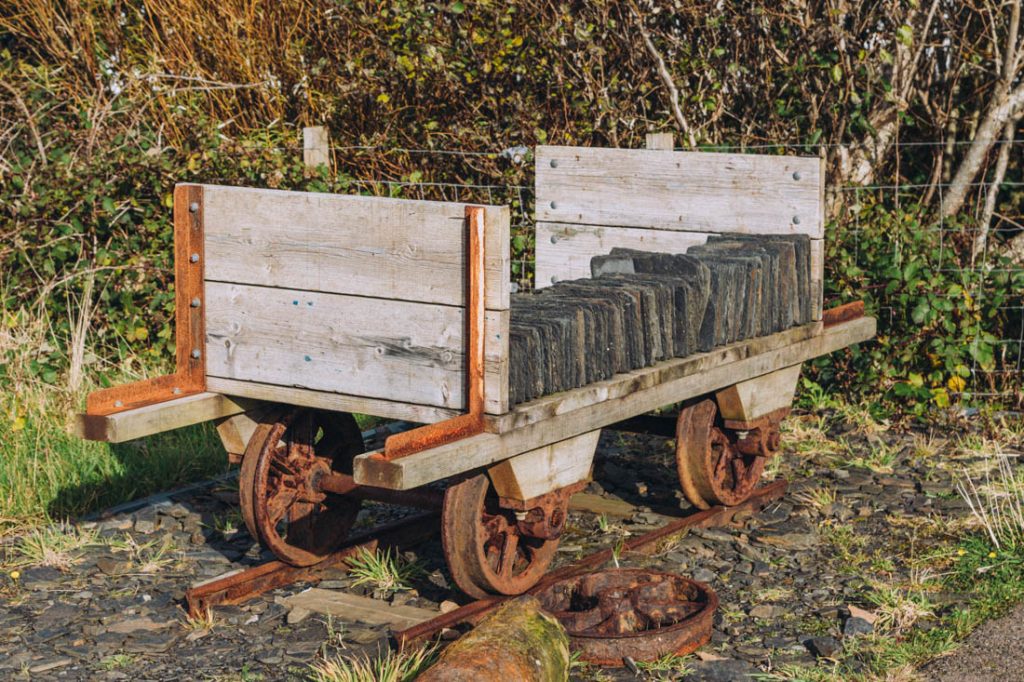
The industry came to a halt following a decline which began in 1881, with the ‘Great Storm’. The force of the wind and tidal waves flooded many of the quarries on the islands; the equipment was now damaged or under water.
Attempts to revive the industry proved futile, and over the decades which followed, many of the workers left for America in pursuit of gold, while others were sent to war. Indeed, when all the men from the island of Belnahau were sent off to fight in WWI, the island was evacuated of its remaining residents, and it has lain derelict ever since.
New slate quarries were appearing on the mainland and in Spain, and the composition of their slate meant that it could be cut by machines, making it cheaper to produce.
Scottish slate had to be hand cut, so the demand for it was already on the decline. By the 1960s, the slate industry was no more.

The slate industry may be gone, but it’s certainly not forgotten. There are various reminders of this ceased industry; the old wooden pier and the crane in the square in Ellenabeich, and the flooded quarries on all of the islands. Oh, and there’s slate everywhere.
It’s on the ground you walk, the roof over your head, and the decorative displays which are randomly dotted around. It even brings people from all over to the world to take part in a rather curious competition. More on that later!
Despite all this, there is more to these unusual islands than their metamorphic rock. Don’t let the name give you the impression are they are dull, grey and industrial. They have so much colour and character.
The Slate Islands really took me by surprise; largely because I had no idea what to expect. Let me help you with that.
Fast facts about the Slate Islands
- The island’s famous Dalradian slate was formed during a collision of continents over 500 million years ago. Try wrapping your head around that number!
- The islands, which are also referred to as the Atlantic Islands, have around 3,000 archaeological sites, 44 Sites of Scientific Interest and numerous conservation areas.
- In 536AD, St Columba arrived on the Isle of Iona and established the monastic community on the island. It was around the same time that St Brendan came to Isle of Seil and travelled to the Garvellachs, which are a group of uninhabited islands in the Atlantic. It is believed that he set up a Celtic monastery on the largest of the islands, and the ruins of the ‘beehive cells’ can still be seen today.
- The first written record of slate being taken off Easdale for commercial purposes is from the 17th century. As well as being exported globally, the slate from these islands was also used on some iconic (reasonably local) buildings, such as Ardmaddy Castle, Castle Stalker, Cawdor Castle and Glasgow Cathedral.
- The current population on the islands sits at around 150 people on Seil, 200 people on Luing, and 60 people on Easdale.
ISLE OF SEIL
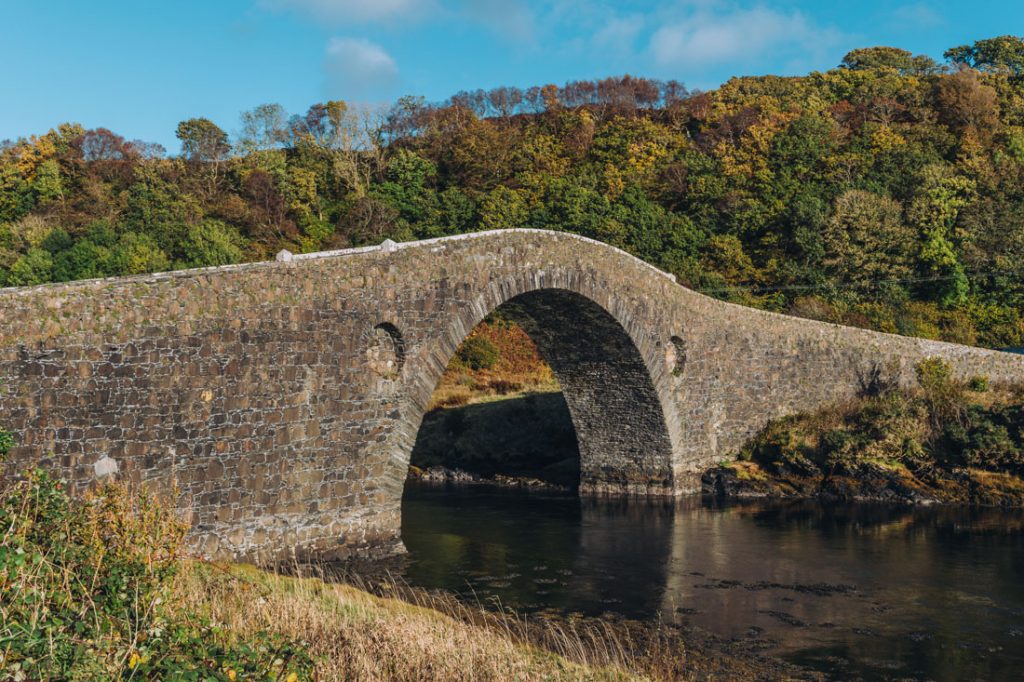
The Isle of Seil has been connected to the mainland by the picturesque Clachan Bridge since 1792; it is also known as the ‘Bridge over the Atlantic’. Some will argue this manmade link strips Seil of its island status, but I think that’s nonsense.
Geographically, it is an island – it just has the added convenience of a bridge. The physical separation from the mainland is very narrow, but I still felt a wave of calm and curiosity wash over me once I knew I had arrived on a new island.
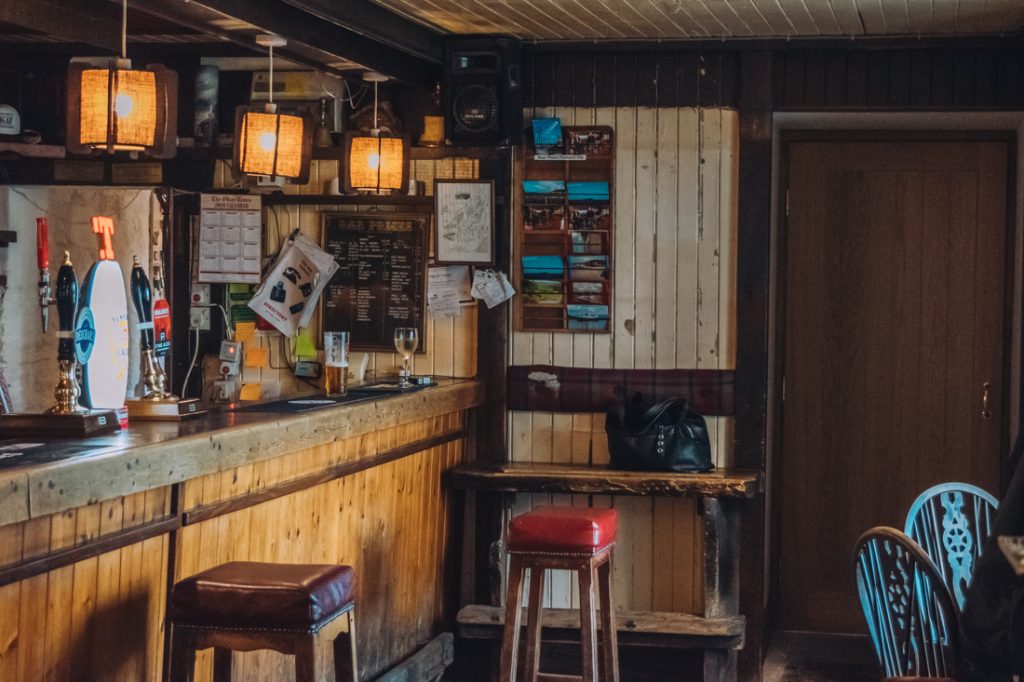
The Tigh an Truish Hotel is the first to greet you on the other side of the bridge. The name translates as ‘house of the trousers’, as this is where rebellious Highlanders would change into their trousers before going to the mainland; wearing “the Highland Dress” was made illegal under the Act of Proscription, following the Jacobite defeat at the Battle of Culloden in 1746.
The wooden-clad hotel bar is really rustic, and is perfect for a post-walk pint or dram.
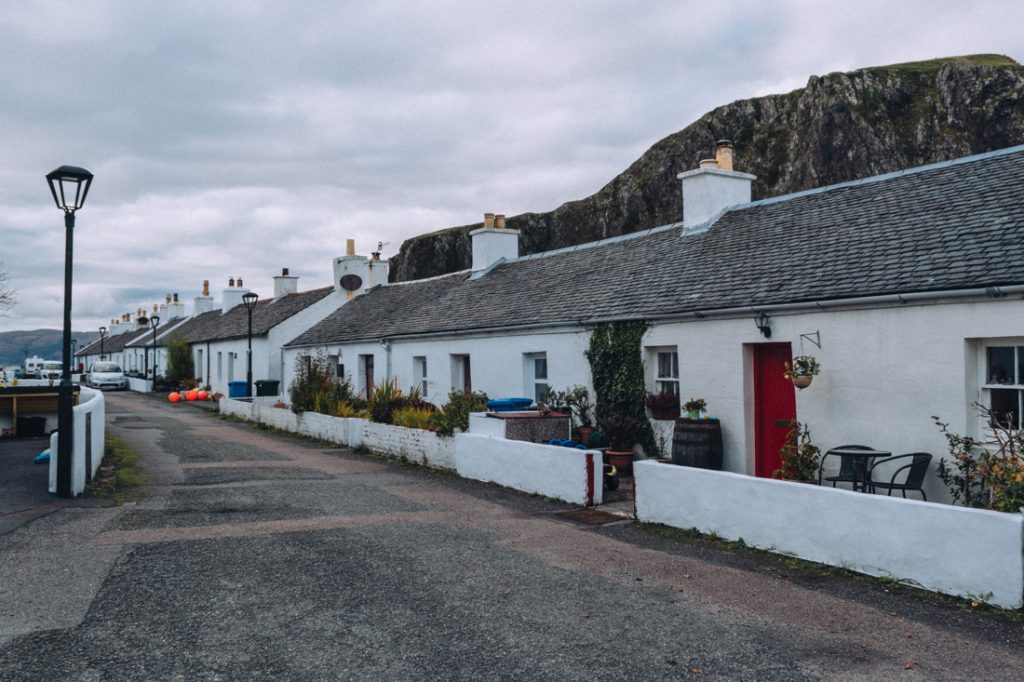
The largest village on the island is Ellenabeich, which looks particularly picturesque with its hillside backdrop, and rows of 19th century workers’ cottages and pretty streetlights.
This is also where you’ll find the Oyster Bar & Restaurant, the Easdale ferry, the Heritage Centre, and the departure point for the Seafari trips to the Corryvreckhan.
THINGS TO SEE & DO ON SEIL
Slate Islands Heritage Centre, Ellenabeich – opened by the Slate Islands Heritage Trust in the year 2000, this small and friendly attraction is packed with local information and Archives to help with tracing Genealogy.
I love old photographs and newspaper clippings, so thoroughly enjoyed browsing the displays to learn about the history and way of the life on these islands. There are also Entry to the centre is free, but you can leave a donation. The centre also sells some wee gifts and beautifully painted slate souvenirs.
Seafari Adventures trip to the Corryvreckan – this high-speed, water-based adventure is an absolute must. Seafari provide full waterproof attire (very fetching), life jackets, and binoculars for spotting wildlife; they were put to good use!
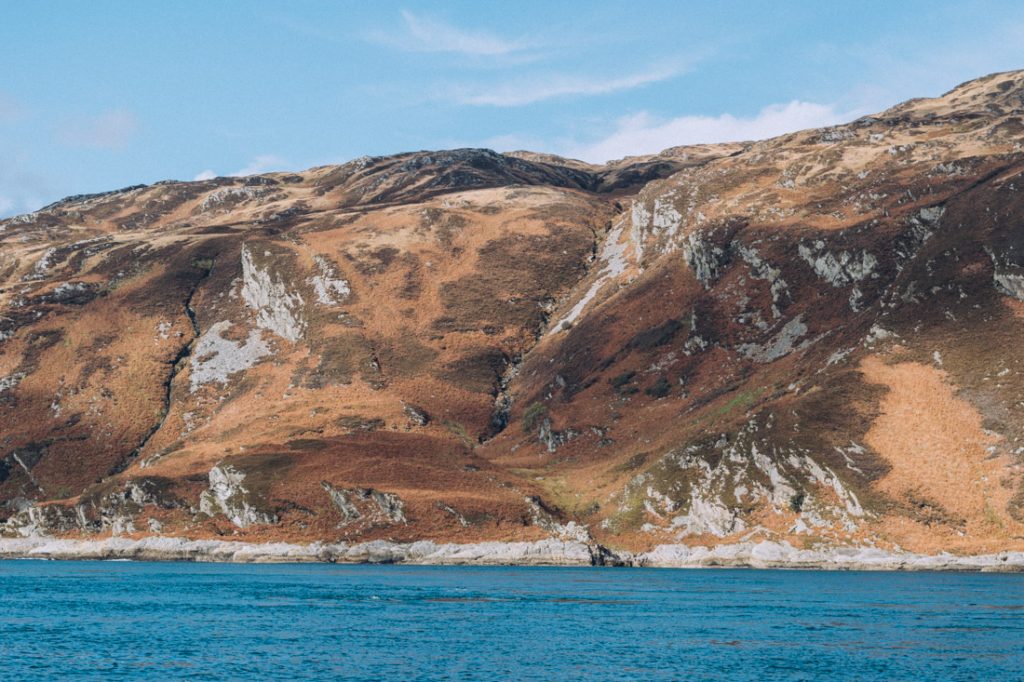
We saw feral goats, cheeky seals and the deer on the hills of Scarba. The highlight for me though was spotting a wee otter splashing around on its search for food.
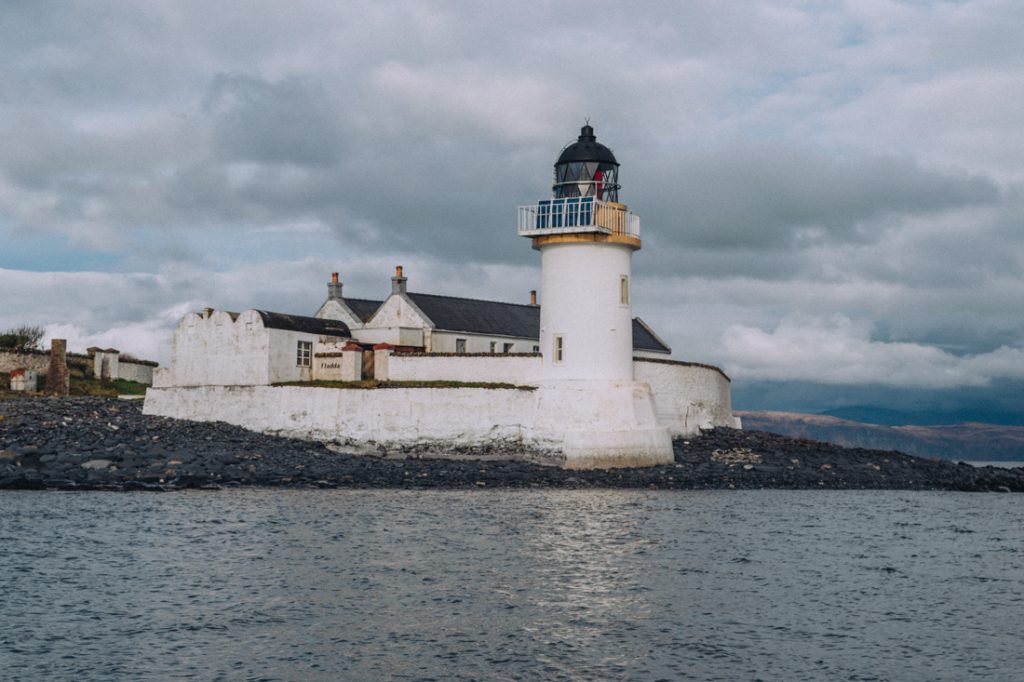
We passed the striking Fladda Lighthouse and the abandoned island of Belnahua on our journey. Our guide Tom kept us entertained with his impressive knowledge, while our thrill-seeker skipper Steve made sure we were all awake with his sharp twists and turns – much to everyone’s enjoyment!
The Corryvreckhan is the world’s third largest whirlpool, and while it wasn’t in full whirl on our trip, there was a definite change in the movement of the water. Back at the booking office/shop, you can grab a hot drink to warm up, chat to the lovely team, or pick up a souvenir from the island.
Walk to Puilladobhrain Anchorage – this short, scenic walk leaves from Clachan Seil, just to the right of the Tigh an Truish Hotel. I spotted deer and the fluffy bums of rabbits as I walked across the field and down towards the anchorage.
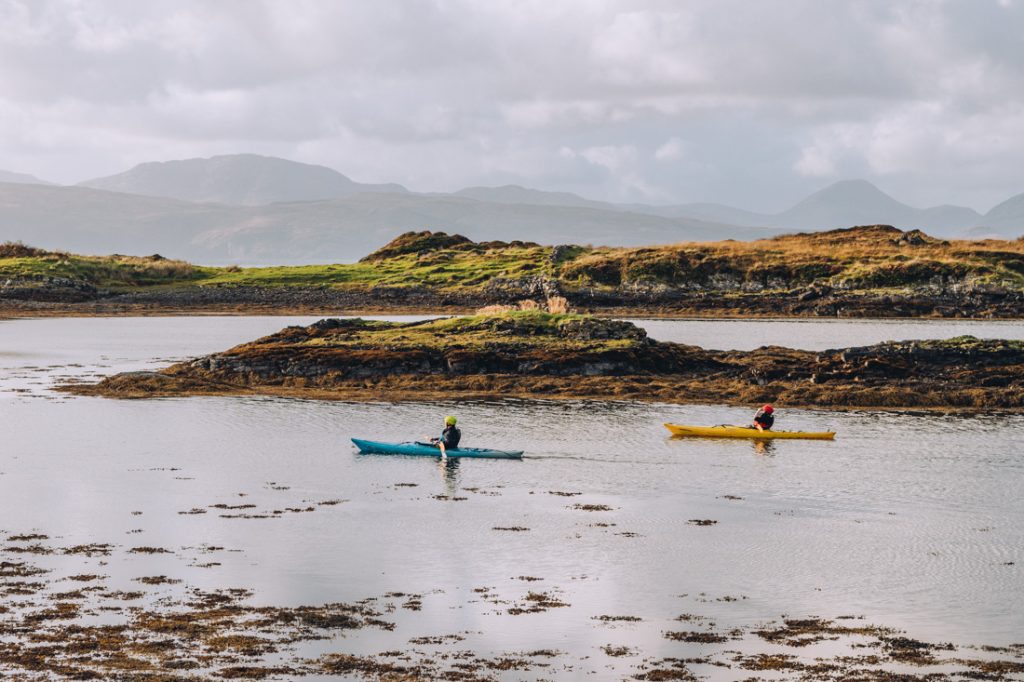
This sheltered spot is popular with yachts and boats in the summer months, but there were none on my visit; just an old shipwreck across the bay and a handful of other people. I watched kayakers breeze through the calm waters, which reflected the sky. An ideal spot to sit and gathered your thoughts.

WHERE TO EAT ON SEIL
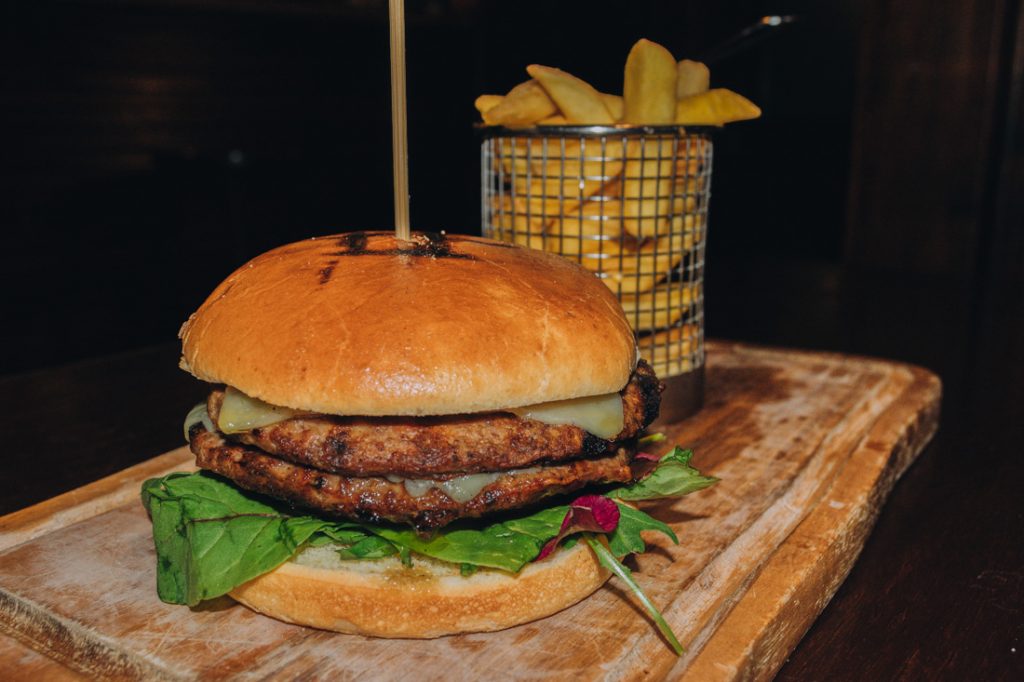
- Oyster Bar and Restaurant – go here for big portions of decent, home-cooked pub food. I dined here a couple of times, and given the name of the venue, I obviously tried a trio of oysters. I also really enjoyed the chargrilled beef burger and chilli beef nachos. There’s an outdoor decking area with gorgeous views of the flooded quarry if the weather permits, otherwise you can get cosy beside the fire inside. The customer-facing staff were young people from the local area (I think) and they were absolutely lovely.
- Balvicar Stores – if you’re planning to self-cater, you can spend your money locally by picking up supplies from the shop in Balvicar. For longer stays, you may wish to stock up from one of the bigger supermarkets in Oban.
ISLE OF LUING
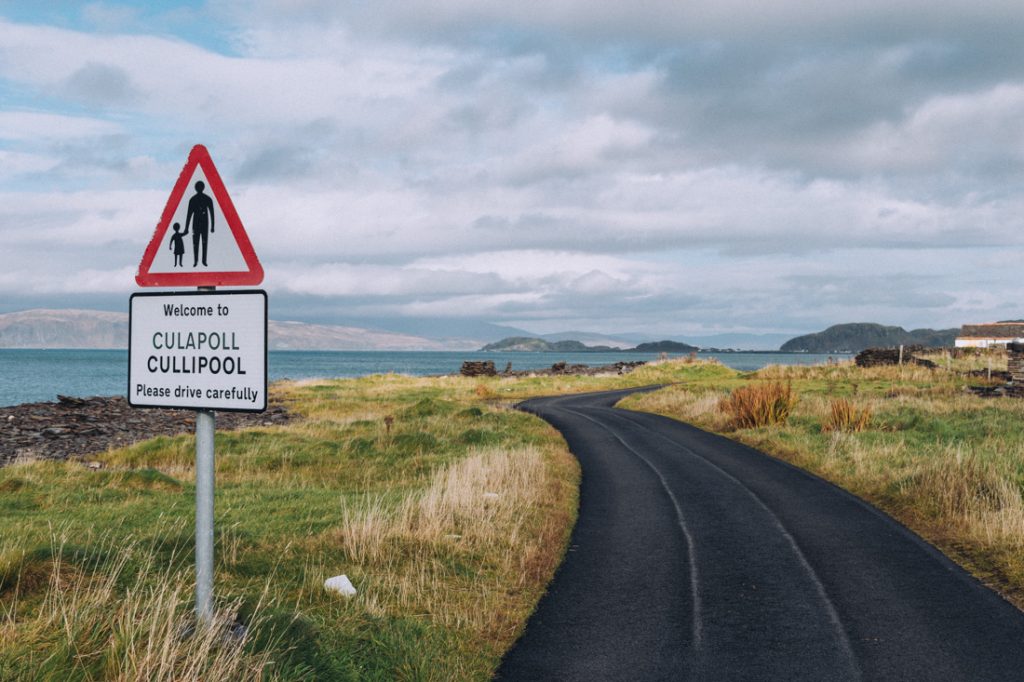
The car-ferry from Cuan on the Isle of Seil has you on the shores of Luing within just a few minutes. I loved the open-air ferry ride across the fast-flowing Cuan Sound, however I believe the locals are strongly in favour of having a bridge over the water. Maybe one day! When I arrived on the island, I walked the coastal route round to the village of Cullipool.
There was no mistaking the fact I was on a Scottish Island, but it was just so different. The quirks of the landscape were unlike anything I’d seen before. There are no sandy beaches on Luing, instead the waste from the slate quarries has been smoothed and shaped by the sea, creating unusual slate-pebble beaches which are dotted along the coastline.


Tall, abandoned quarries have their own wee caves and waterfalls; the subtle sound of the cascade echoing out into the wide-open space. On closer inspection, you can admire the layers and colours within the slate; a joy for geologists, I bet!
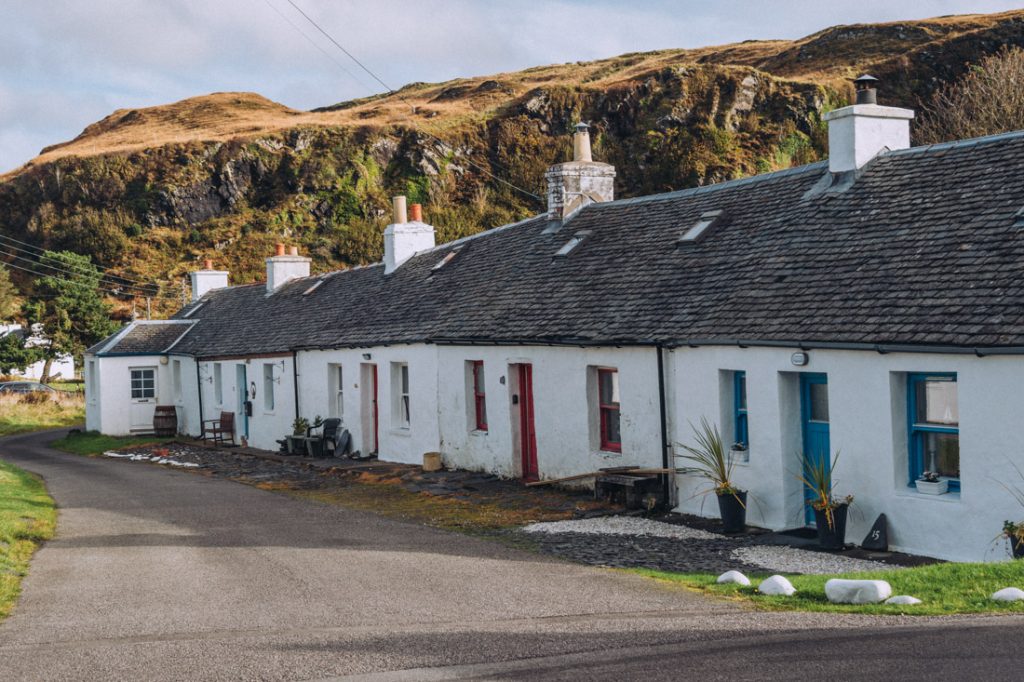
Cullipool is a wee charmer of a village. Rows of cute, white cottages with colourful doors line the streets and overlook the flooded slate quarries.
Look out for the classic red phone box, and the information boards on the waterfront with details about the local slate and wildlife. From Cullipool, you can follow the road back to the ferry to complete the loop, or go via the island’s highest point, Cnoc Dhomnuill.
THINGS TO SEE & DO ON LUING
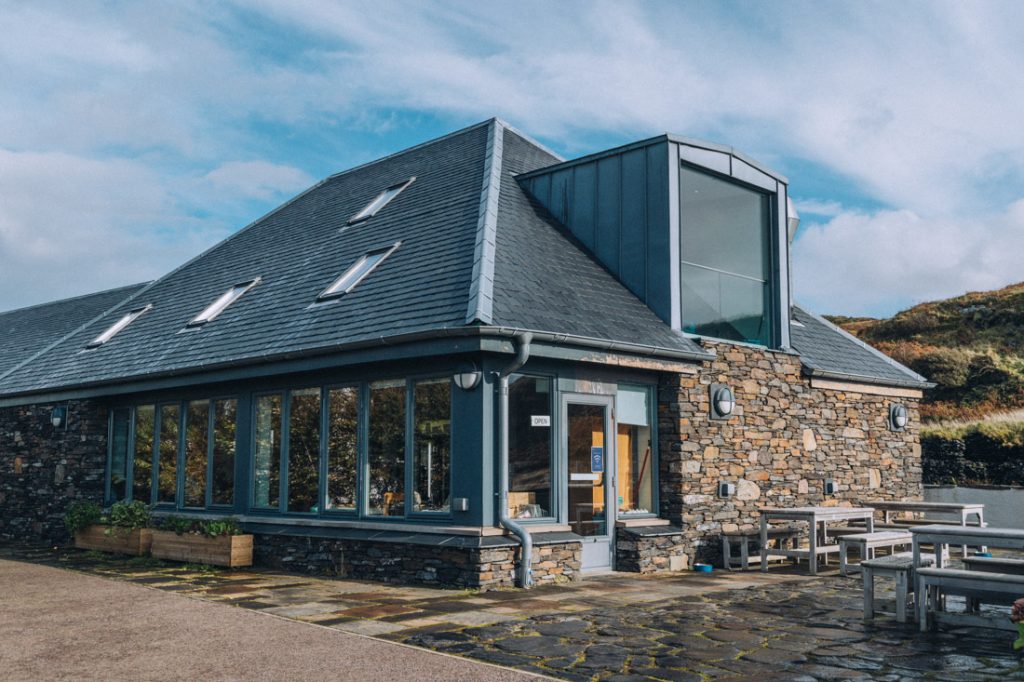
Atlantic Islands Centre – the centre was opened in 2015 after a £1.2million development commissioned by The Isle of Luing Community Trust.
The building sits of the edge of a flooded slate quarry and has been designed to reflect the village’s heritage, and compliment the nearby quarrymans’ cottages. The interior is flooded with natural light, and you’ll find exhibits which cover the islands’ wildlife, geology, and slate industry.
Upstairs is the Luing History Exhibition which is run by the Isle of Luing History Group, and there’s a lovely café and gift shop filled with local crafts.
The centre is a charity-run organisation, which holds events for the residents on Luing – and even does fundraising for other charities on the mainland! A brilliant asset to the local community and visitors to the island.
Explore the island by bike – during the summer months, you can hire push bikes and electric bikes from Sunnybrae Caravan Park, which is just a short walk from the ferry terminal. Luing is just 6 miles long by 1.5 wide (with a few wee hills) so you could easily cover the island in one day. I had intended to cycle to Toberonochy, however, the bikes weren’t available during my visit in mid-October, so it’s worth phoning ahead to check.
WHERE TO EAT ON LUING
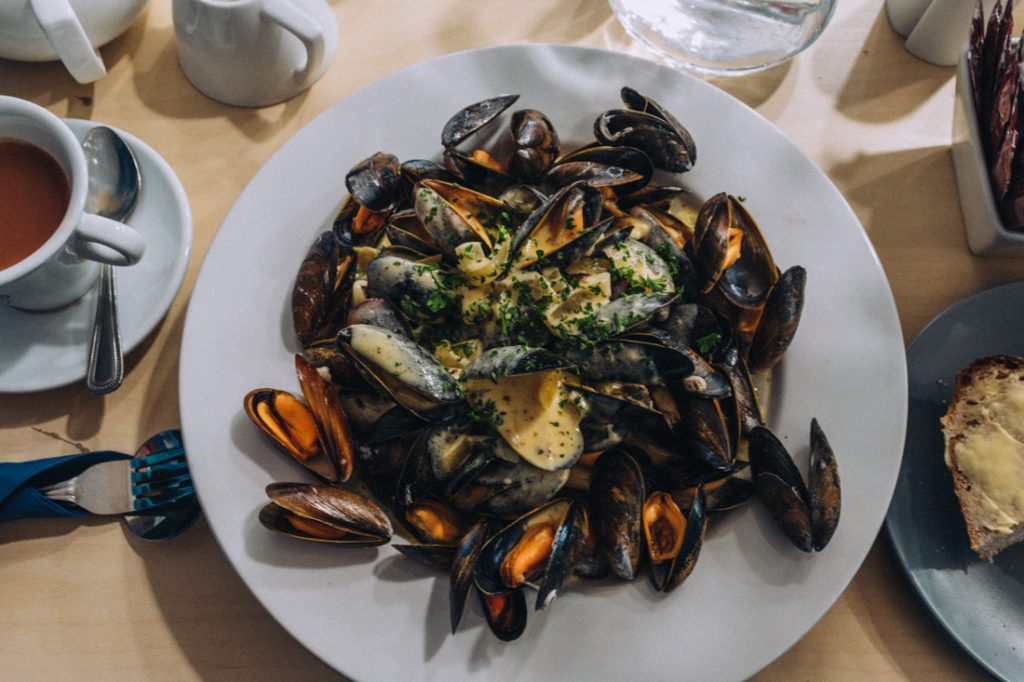
- Atlantic Islands Centre – the café at the Atlantic Islands Centre is known for its tasty lunches and local seafood. I ordered the mussels and was presented with a MASSIVE bowl plus bread and butter. The mussels were plump and fresh, and the white sauce was so good I wanted to pick up the bowl and drink from it. The staff do a brilliant job of running the centre and the café, and the delicious cakes are home-baked by local volunteers.
- Luing Stores and Post Office – if you are looking to pick up any supplies, there is a shop on the road into Cullipool. The business risked closure when the previous owner put it for sale, but luckily it was taken over by a local couple Birgit Whitmore and Norman Bissell. This would’ve been a huge lose to the community, so it’s brilliant to see it still up a running. A great local business to support on your visit!
EASDALE ISLAND
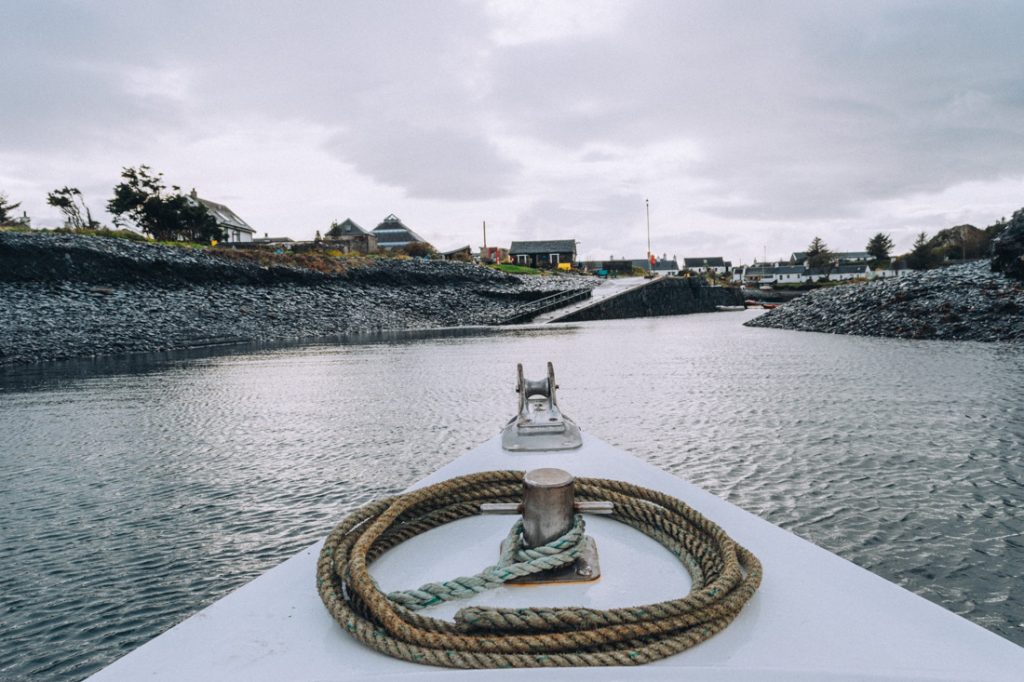
Easdale is as cute and quirky as they come, and this is apparent from the very moment you summon the “ferry”. After pushing a button in a wee wooden hut in Ellenabeich on Seil, a small motor boat shortly arrives into the harbour.
Smiling visitors, locals armed with bags of shopping, and four-legged friends climb aboard for the mini voyage, spanning 340 meters over Easdale Sound.
Three minutes later, you’ve graced the shores of Easdale and rows of colourful wheelbarrows immediately catch your eye. There are no cars on the island, so that’s your means of transporting goods (or small kids) right there – not that you need to go far.
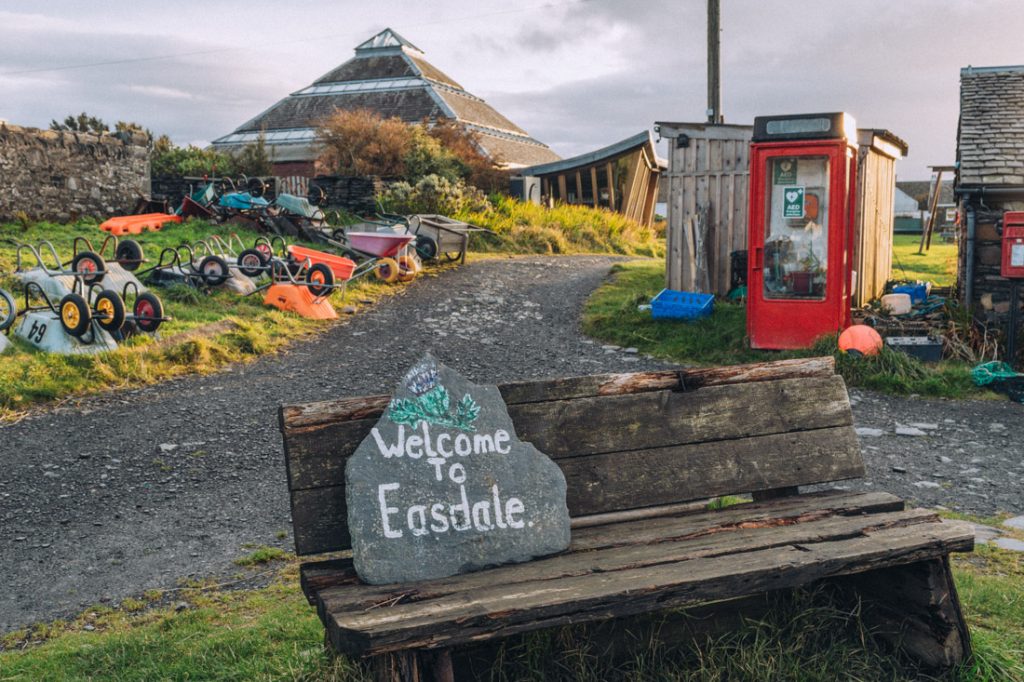
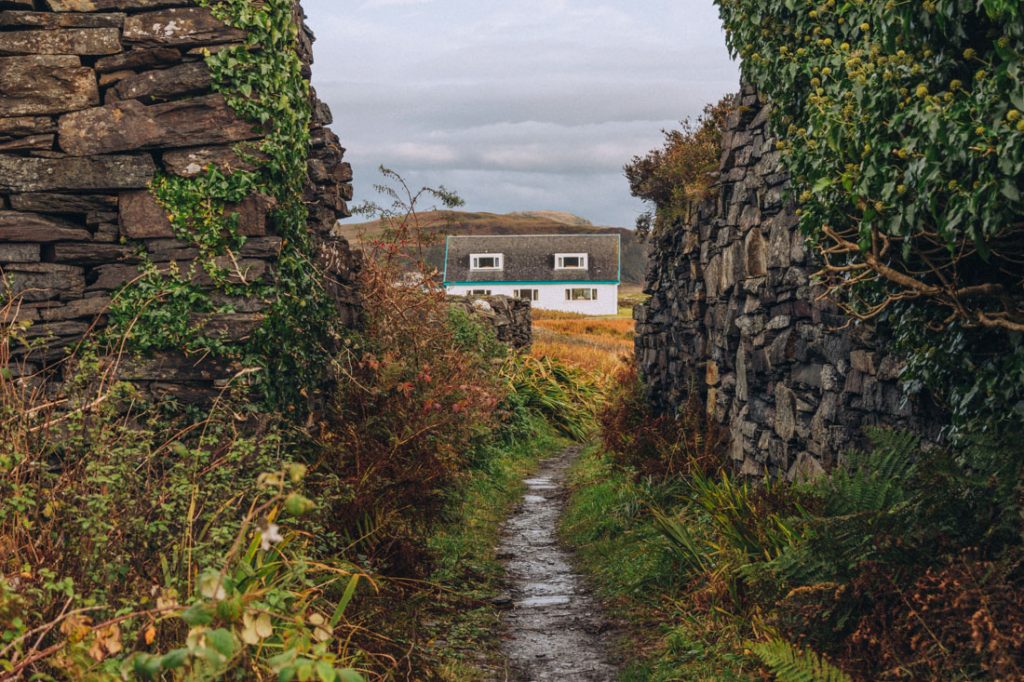
This compact island consists of quaint cottages built for the quarry workers, a picturesque wee harbour, and several flooded quarries.
The quarries are strikingly beautiful, and you may almost forget that they are the product of a disaster which had a profound impact on the local community and economy.
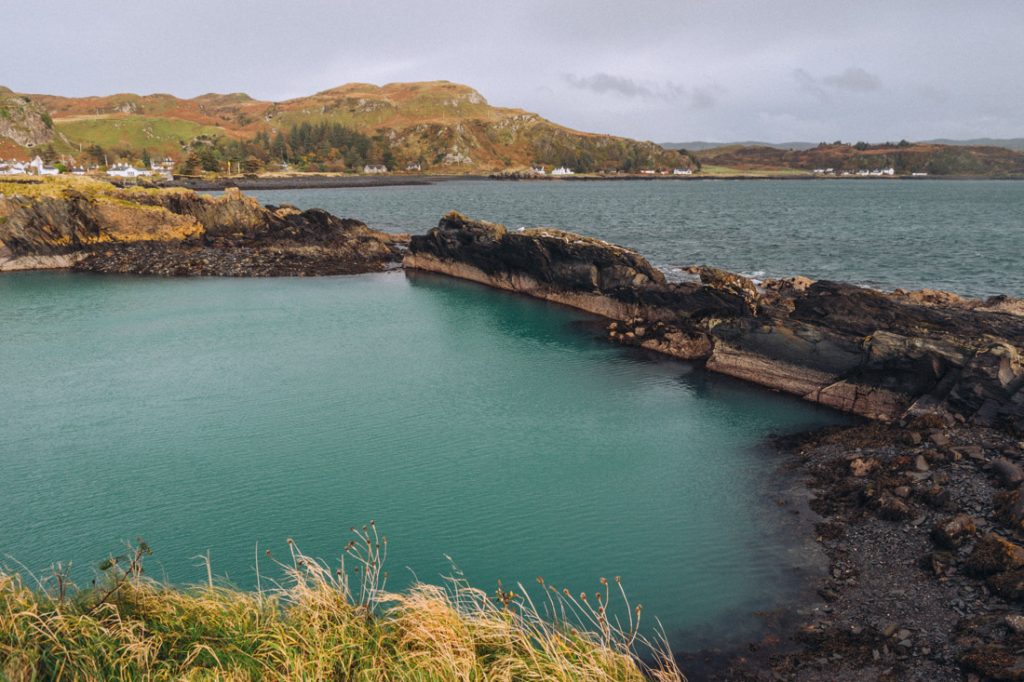
On a lighter note, these disused quarries now have a new lease of life, as alfresco swimming pools for locals and visitors. There is one next to the Easdale Folk Museum which is particularly inviting, with its uniquely bright blue water.
There is apparently no explanation for its colour, nor why it is so different from the rest. I almost definitely would have gone for a dip if a) I’d had swimwear, b) I’d had a towel and c) it hadn’t been so cold and windy.
Instead, I stayed on dry land and explored on foot. I met the cutest kids who very politely sold me ‘Magical Charms’ and painted stones, and I bumped into an old colleague from my tour-guiding days – in the pub of all places!
The “ferry” back to Seil in the pitch dark topped off what was a very special short visit. I really fell in love with Easdale. It’s a tiny island with big personality.
THINGS TO SEE & DO ON EASDALE
Attend the World Stone Skimming Championships – one positive which has come from the defunct slate industry, is the island’s most interesting and unexpected claim-to-fame.
The flooded quarries and abundance of smooth, flat stones make Easdale the perfect place to host the World Stone Skimming Championships! Every year, hundreds of people come to the island to compete, and they take it quite seriously. I need to see this for myself!
Visit Easdale Folk Museum – this community-run museum provides lots of insight into the immensely interesting history of these islands.
There was slate (obviously) and some of the tools used to quarry it, as well as a short video with footage of the men working in the slate quarries. My eyes were also drawn to the black and white photographs of the islanders during Victorian times, and the tweed wedding outfit which was worn by a lady in 1903.
There is a wee craft shop at the back of the museum, with items which are hand-knitted by Lynn, who works at the museum. I bought a new bobble hat which I receive lots of compliments on! Entry to the museum is £6 and it’s absolutely worth it.
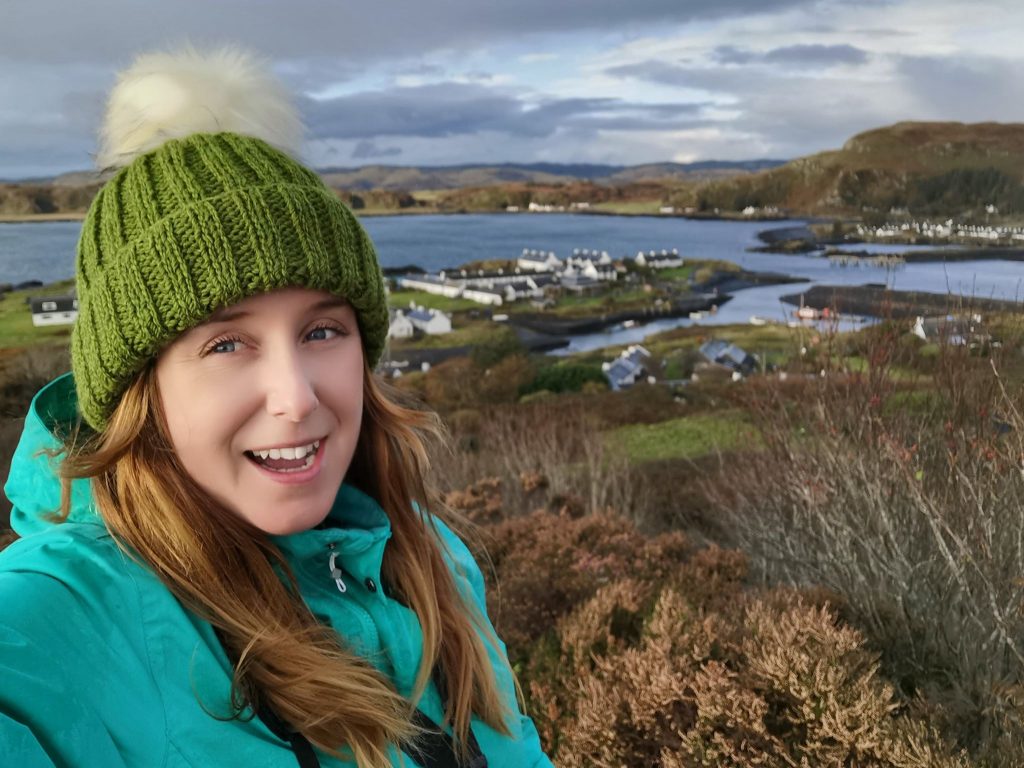
Take a walk – you can walk around the island, past all the flooded slate quarries, and up to the highest point, in under one hour. This is the perfect excuse to just take your time, and absorb the views. I felt completely wrapped up the island as I stood at the top of the hill, breathing in the fresh air and daydreaming to the sight of surrounding islands.
I think you could do this walk every single day and never tire of it. I’ll definitely be back to stay on the island next time, and do exactly that.
WHERE TO EAT ON EASDALE
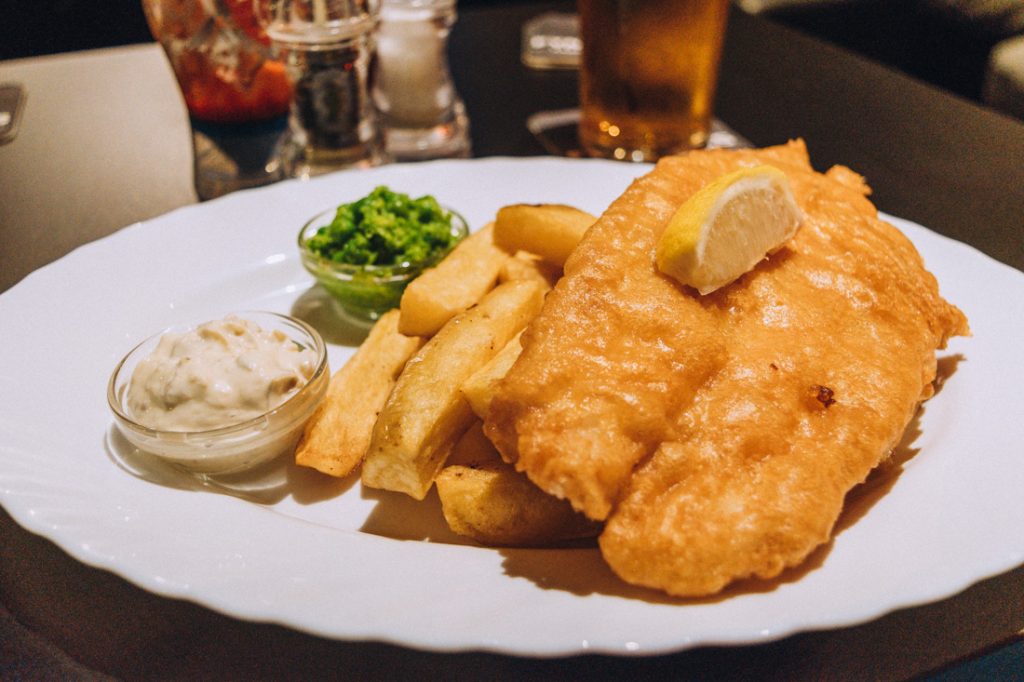
- Puffer Bar & Restaurant – named after the puffer ships which used to transport slate from the island, this is the only bar/eatery on Easdale, but it really is all you need. A warm welcome awaits as you step inside the cosy wee bar area, and the restaurant has an excellent reputation for its food. I visited on Fish & Chips night, and it certainly did not disappoint. Everything was fresh and delicious, and the tartare sauce was presented in an oyster shell. Can’t wait to go back and sample the full menu!
- Self-catering – if you’re staying on the island, you will need to buy your shopping in Oban or on Seil before you arrive.
If you would like help planning your own adventure on the islands, or anywhere else in Scotland for that matter, I’m your lass! Whether you need some feedback and local suggestions on your itinerary, or you would like an itinerary created from scratch, check out my Itinerary Planning services
ACCOMMODATION ON THE SLATE ISLANDS
You won’t find any hotel chains on these islands, but there are a number of guesthouses, cottages, B&Bs and Airbnbs to choose from.
I stayed in two different Airbnbs on the Isle of Seil, which are run by people who actually live on the island – which therefore benefits the local economy. I thought Seil was the perfect base, as you can easily reach Easdale and Luing from the island. I would like to stay in a wee cottage on Easdale when I go back though!
I would highly recommend the Airbnbs that I stayed in. They offer completely different experiences, depending on what it is you’re looking for. Check them out below.
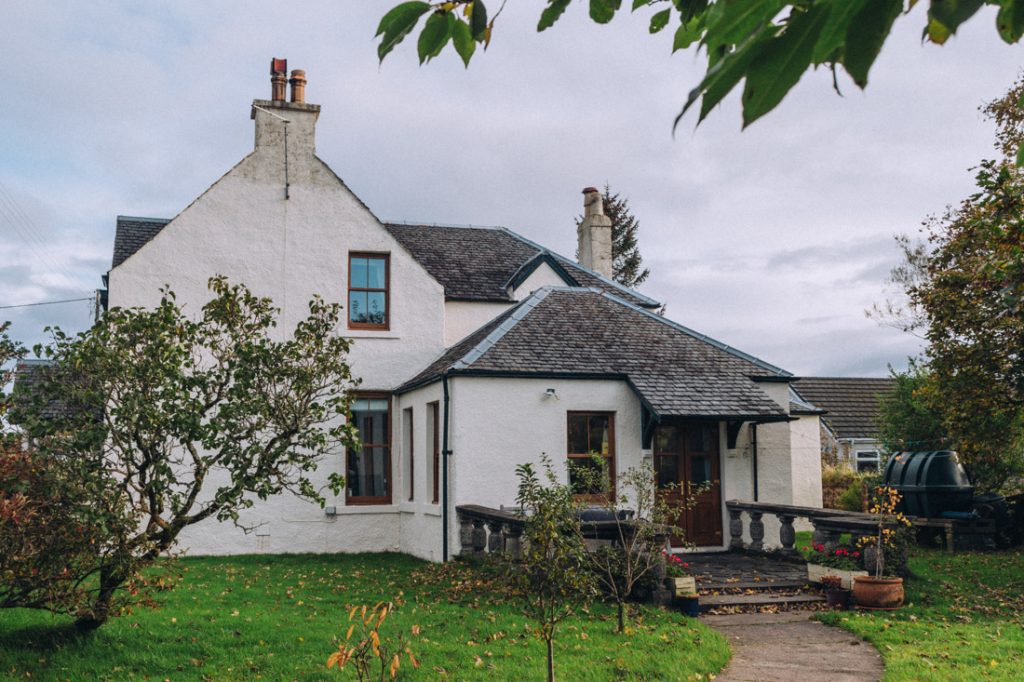
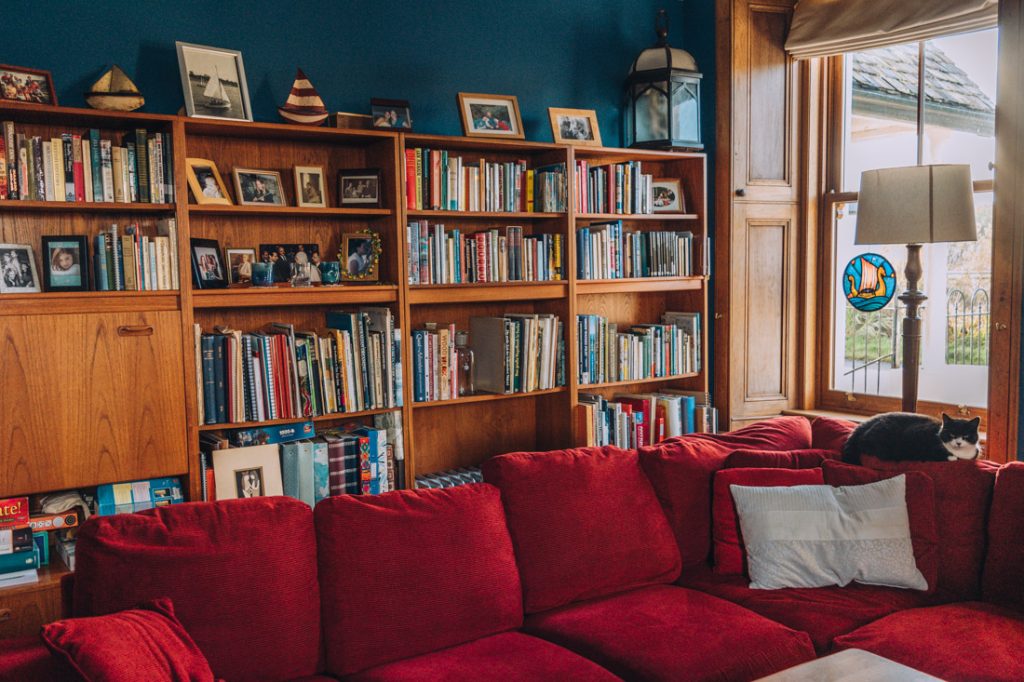
Balvicar House – this experience is exactly what Airbnb started as; a room in someone’s house. Uta and Ian welcome you into their cosy home like you’re one of the family. The couple have lived on the island since 2016, but have been sailing around the Scottish Isles for much longer.
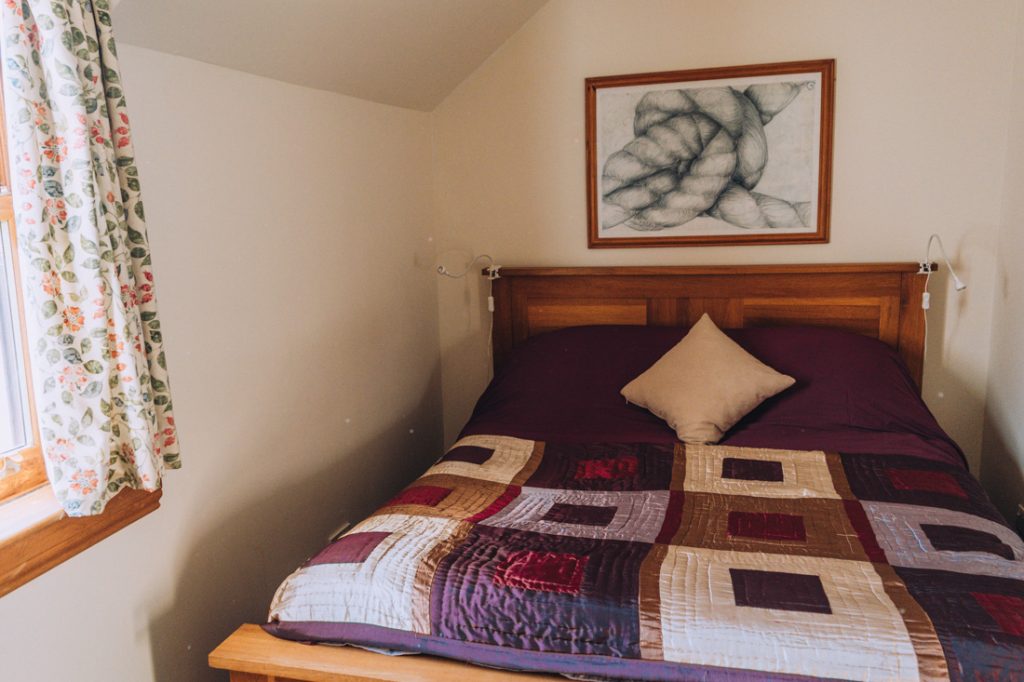
Their local knowledge and travel tales are second to none! My homely double room had an en-suite shower, and guests are invited to make use of the lounge area, with a big comfy couch and crackling wood-burner.
Breakfast includes local bread, cereal, jams, fruit juice and eggs – cooked as you like them. Balvicar House is conveniently located next to the bus stop, Post Office, and shop. To check availability and book, check out the Airbnb listing here.
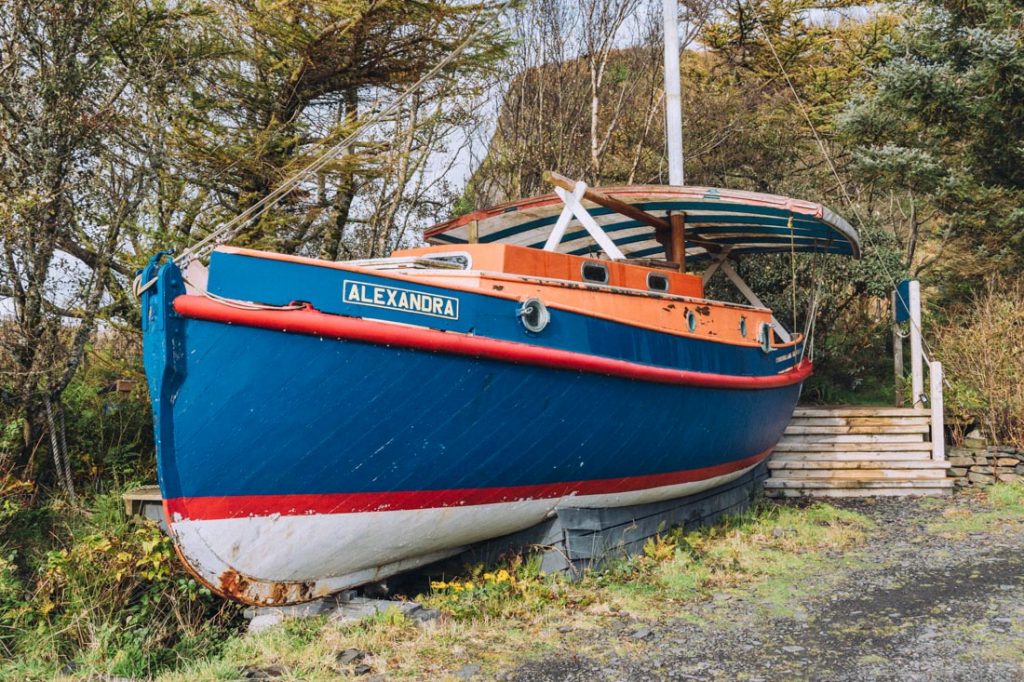
Alexandra Lifeboat – this is definitely one of the quirkiest Airbnbs I have come across yet. The Alexandra sits in a peaceful wee bay in Cuan Ferry, within close walking distance of the bus stop and the ferry to Luing.
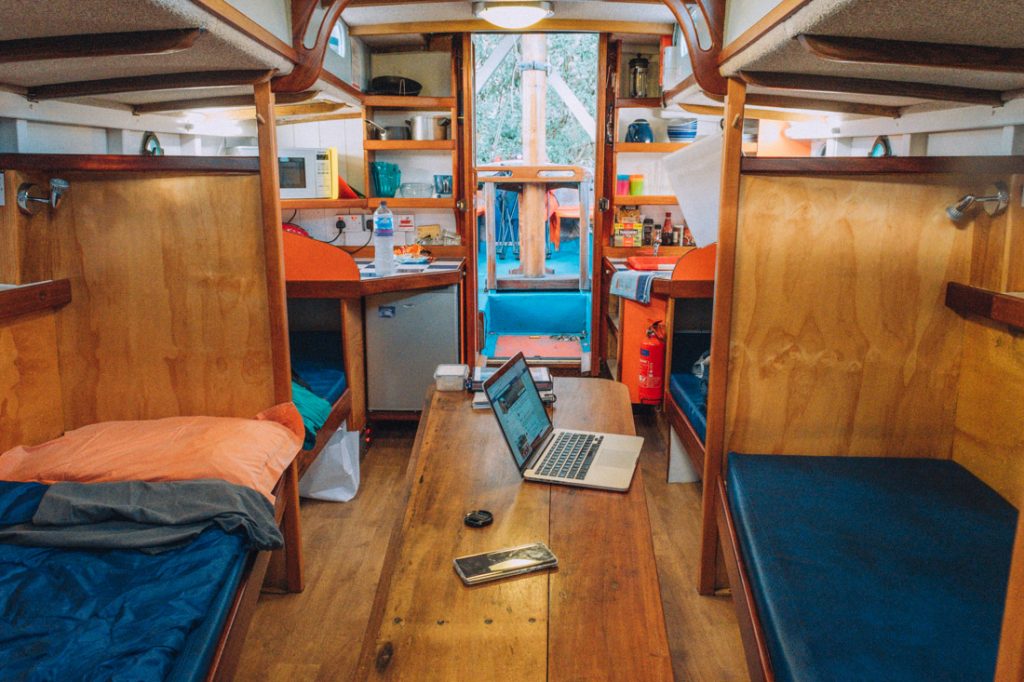
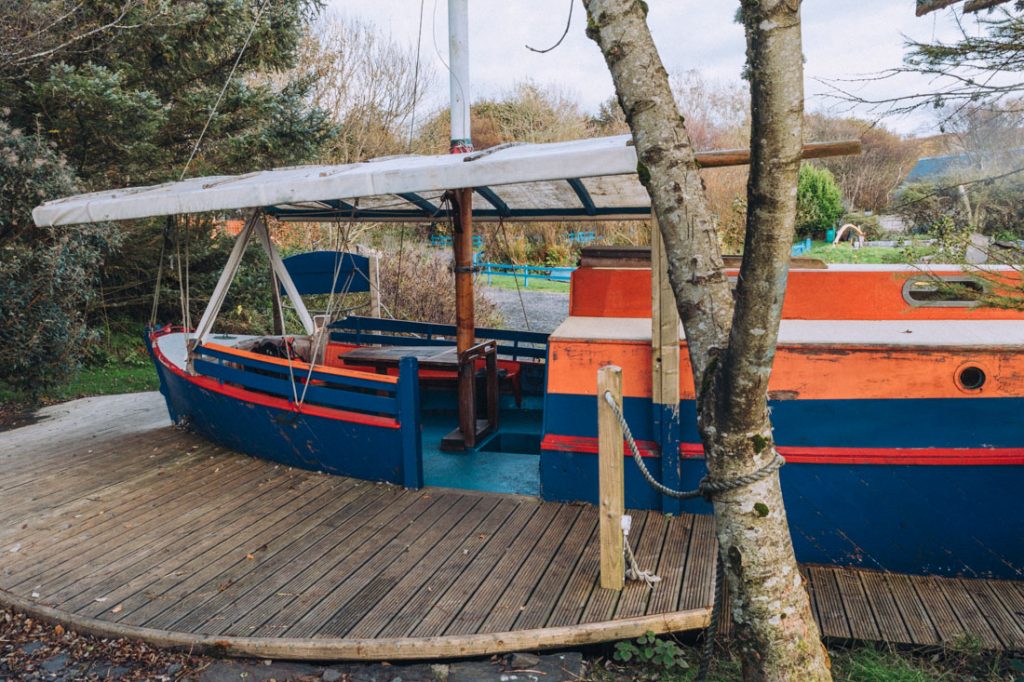
The vessel was built in 1903, and it has since been tirelessly restored and transformed into a quirky Airbnb by the current owner Michael and his family. The boat has 6 berths, a well-equipped galley, and an outdoor seating deck. There are plug sockets, indoor and outdoor lighting, a fridge, and a heater – which kept me really cosy in the month of October. You need to take all your own food supplies with you, however you can rent a sleeping bag and pillow if you don’t have your own.
There is another converted lifeboat, The Mary Heather, close to the Alexandra, which still has the steering wheel and old radio equipment – brilliant for kids!
They both share a separate pod with shower and toilet facilities, which is just a short walk away. Such a unique, nautical-themed experience. To check availability and book, check out the Airbnb listing here.
HOW TO GET TO THE SLATE ISLANDS
I travelled to the Slate Islands on public transport from Edinburgh. While it is possible this way, you are fixed to the times of the local buses, which are much less frequent than other islands I have visited; there are sometimes only one or two buses per day.
I was still able to get around and do everything that I wanted to do, mainly thanks to my hosts, and other people I met along the way, kindly offering me lifts. I did travel on the sporadic local buses, and also did lots of walking! To get to the Slate Islands without a car:
- Book the Scotrail train from Edinburgh to Oban via Glasgow – this is a beautiful journey on the West Highland Line which takes between 4 and 4.5 hours. For the best fares, aim to book 12 weeks in advance through the Scotrail website.
- Catch the local bus from Oban to Seil – the West Coast Motors services 18 and 418 travel over the Clachan Bridge onto the Isle of Seil, and travel as far as Cuan (for the ferry to Luing) and Ellenabeich (for the ferry to Easdale). You can view the timetable on the West Coast Motors website.